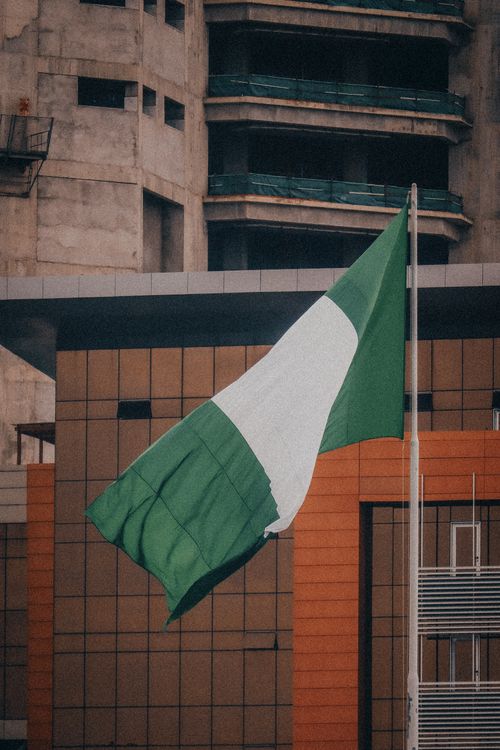
Nigeria’s flag went up for the first time on 1 October 1960, and four men stood at the centre of that story. No two of them wanted quite the same country. Sir Abubakar Tafawa Balewa took office as federal Prime Minister. Chief Obafemi Awolowo led the opposition from the Western Region. Dr Nnamdi Azikiwe held the East before rising to a ceremonial headship of state. Sir Ahmadu Bello, the Sardauna of Sokoto, ruled the North and chose never to leave it. History books like to gather these four under one tidy heading, “founding fathers”, as though independence had been a shared project pursued in harmony. It was not. Each man built his career on a regional base, spoke first to his own people, and treated the others as rivals for a country none of them agreed on how to run. That rivalry is the founding story, and Nigeria still feels its aftershocks.
Sir Abubakar Tafawa Balewa: the Prime Minister who did not command the North
Balewa became Nigeria’s first federal Prime Minister in 1957. He held the post through independence in 1960 and into the crisis years that followed, until his assassination in January 1966. He led the Northern Peoples’ Congress in the federal parliament, yet by the standards of the northern political establishment he was an outsider: a commoner from Bauchi, not a member of the aristocratic Fulani ruling houses that dominated the region. That mattered. The NPC’s real centre of gravity sat with Ahmadu Bello in Kaduna, not with Balewa in Lagos, and Balewa himself said his authority was circumscribed by a federal structure built to protect regional power rather than concentrate it at the centre.
Balewa’s task after 1960 was to hold together a coalition between the NPC and Azikiwe’s National Council of Nigeria and the Cameroons, a marriage of convenience between North and East that left Awolowo’s Action Group out in the cold as the official opposition. On paper, it was workable. In practice, Balewa spent his premiership managing a census dispute, a fractured Western Region, and a federal election crisis in 1964 that nearly broke the coalition apart, while the deeper question of who Nigeria actually belonged to went unanswered.
Chief Obafemi Awolowo: the West and the opposition
Awolowo led the Western Region as its first Premier from 1952. He became Nigeria’s most systematic thinker on federalism: his 1947 manifesto, Path to Nigerian Freedom, was the earliest sustained argument by a Nigerian politician for a genuinely federal constitution, one that would let each region govern its own affairs rather than defer to a dominant centre. In office he delivered free primary education, free child healthcare, and Africa’s first television service, launched in 1959. Of the three regional governments, his was the most ambitious.
Awolowo’s difficulty was federal, not regional. He contested the 1959 pre-independence election for the Prime Minister’s office itself, lost to the NPC-NCNC arrangement, and settled instead for leading the opposition in Lagos from 1959 to 1963. That position turned dangerous once his former ally Samuel Akintola, installed as Western Premier after him, allied openly with Bello’s North. The Western Region split into open, sometimes violent factionalism, so pronounced it earned the nickname “Wild, Wild West”. Awolowo was arrested, tried on charges of plotting to overthrow the federal government, and jailed in 1963, a conviction that silenced the West’s most formidable federal voice for the rest of the First Republic.
Dr Nnamdi Azikiwe: the East and a title without a lever
Azikiwe had been Nigeria’s most prominent nationalist journalist and pan-Africanist before he became Premier of the Eastern Region in 1954. His NCNC grew steadily more identified with Igbo political interests in the south-east. After the 1959 election left no party with an outright majority, he brought the NCNC into coalition with Balewa’s NPC, the pact that made Balewa Prime Minister and left Azikiwe with the Senate presidency, then the Governor-Generalship, then the presidency of the Republic from 1963. Each of those offices carried prestige and almost no executive power. Real authority stayed with Balewa and with the regional premiers. Azikiwe, for all the shrewdness that had built the NCNC into a national force, had accepted a ceremonial ceiling above it.
Azikiwe’s rivalry with Awolowo, in particular, ran deep and personal, rooted in competition for the same southern, educated, nationalist constituency long before either man held office. It would resurface, unresolved, when both stood against each other again as presidential candidates in 1983.
Sir Ahmadu Bello: the Sardauna who stayed in the North
Bello was Sardauna of Sokoto, a descendant of the Sokoto Caliphate’s founding dynasty, and became Premier of the Northern Region in 1954. He led the NPC to a dominant position in federal politics on plain arithmetic: the North’s population gave it more parliamentary seats than the Western and Eastern regions combined. Of the four, he is the one who never sought the Prime Minister’s office for himself. Bello judged, correctly, that his power was greater as unchallenged master of the North than as one politician among many in Lagos, so he sent his deputy, Balewa, south to hold the federal seat in his place while he pursued a policy of “northernisation”, training and promoting northerners into a civil service still staffed disproportionately by southerners and expatriates.
That choice shaped the whole First Republic. Bello held the North’s loyalty as premier and religious dignitary at once, and he wielded federal power through Balewa without ever holding federal office himself. He treated Awolowo’s West and Azikiwe’s East as rivals to be managed, not partners to be trusted. His alliance with Akintola after 1962 was, in effect, the North reaching into the Western Region’s internal politics, precisely the kind of regional interference the federal structure was meant to prevent.
What really divided them
Strip away the personalities and the division was structural. Balewa, Awolowo and Azikiwe each led a party built almost entirely on a single region’s ethnic majority, NPC and Hausa-Fulani North, Action Group and Yoruba West, NCNC and Igbo East, and Bello made sure the North’s numerical weight translated directly into federal dominance. Awolowo wanted a federation of genuinely autonomous regions with a weak centre. The NPC-NCNC coalition that governed after 1960 wanted a stronger, NPC-led centre. Azikiwe wanted national unity on terms that preserved Igbo standing in a system increasingly tilted north. None of these were dishonest positions; each reflected a real fear that another region’s leader, left unchecked, would use federal power against the rest. The 1962 Western Region crisis, the disputed 1962–63 census, and the violent 1964 and 1965 election crises all sprang from the same distrust, each one hardening the grievances left by the last rather than resolving them.
Who were Nigeria’s founding fathers?
Nigeria’s four founding fathers were the leading nationalist politicians who led the country from late colonial self-government into independence and the First Republic: Sir Abubakar Tafawa Balewa (federal Prime Minister, NPC), Chief Obafemi Awolowo (Premier of the Western Region, then federal opposition leader, Action Group), Dr Nnamdi Azikiwe (Premier of the Eastern Region, then Governor-General and President, NCNC), and Sir Ahmadu Bello, the Sardauna of Sokoto (Premier of the Northern Region, NPC). Between them, they represented Nigeria’s three regions and its federal government, and their rival visions of regionalism versus federalism shaped the country’s constitution, its politics, and ultimately its 1966 crisis.
The legacy: a republic that never settled its founding argument
On 15 January 1966, a group of army majors killed Balewa, Bello and Akintola in Nigeria’s first military coup. Azikiwe was abroad; Awolowo was still in prison. That the coup’s dead were drawn so heavily from the North and its Western ally, while the East’s leadership largely survived, was enough for many Nigerians to read it as an ethnic reckoning rather than the anti-corruption uprising its plotters claimed, a reading that hardened into countrywide violence and, within eighteen months, the Biafran war. The founding fathers had spent six years arguing over how much power the regions should hold against the centre, and how much any one region should hold over the others. The coup did not resolve that argument. It simply removed the men who had been having it out loud.
Sixty-six years on, I find it hard to read Nigeria’s continuing debates over restructuring, resource control, and the informal rotation of the presidency between north and south as anything other than the same argument, unresolved, under different names. Balewa, Awolowo, Azikiwe and Bello did not disagree for want of vision. Each held a competing, genuinely defensible idea of what a fair Nigeria should look like, and the country has never quite finished choosing between them.