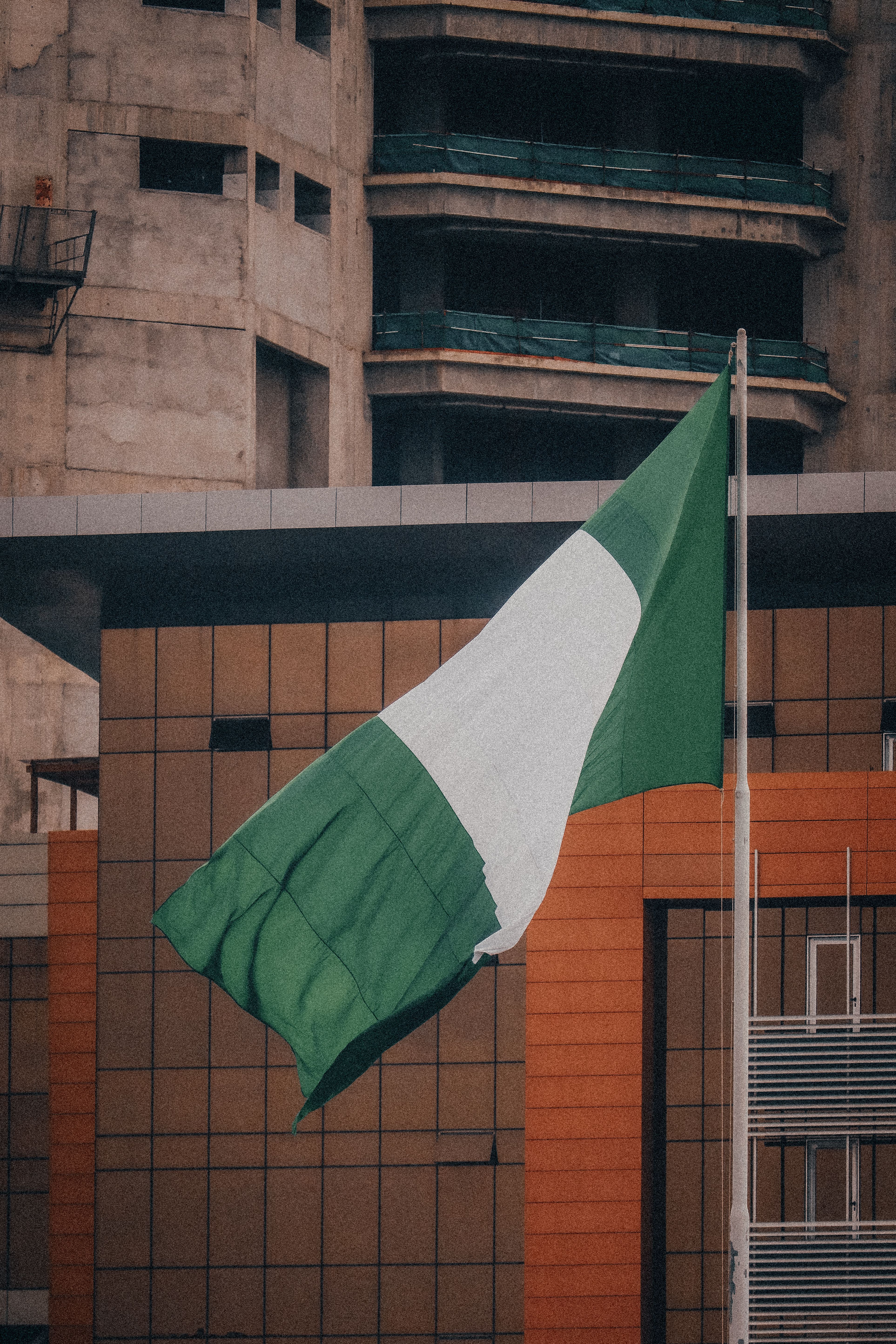
Nigeria has now lived under civilian rule for longer than at any point since independence in 1960. That fact alone is worth pausing on, because for much of the country’s history, “president” was a title that arrived and disappeared with the next coup. Since 1999, when General Abdulsalami Abubakar’s military government handed power back to an elected civilian, five men have held Nigeria’s presidency: Olusegun Obasanjo, Umaru Musa Yar’Adua, Goodluck Jonathan, Muhammadu Buhari, and Bola Tinubu. One died in office. One became the first incumbent in Nigerian history to concede an election. One was the first opposition candidate ever to defeat a sitting president at the polls. Between them, they cover almost thirty years of a democracy that is still, in relative terms, young. This is a plain guide to who each of them was, how they got the job, and how their time in office ended, the essential shape of Nigeria’s Fourth Republic, without the noise.
Olusegun Obasanjo (1999–2007): The General Who Handed Power to Himself, as a Civilian
Obasanjo was an unusual choice to lead Nigeria’s return to democracy, given that he had already ruled the country once before, as a military head of state from 1976 to 1979, when he became the first military ruler in Africa to voluntarily hand power to an elected civilian government. Two decades later, he returned as a civilian himself, winning the 1999 presidential election as the candidate of the People’s Democratic Party (PDP) and taking office as Nigeria’s Fourth Republic began. He was re-elected in 2003.
His presidency was largely about the difficult work of civilian consolidation after fifteen years of military rule. He reformed and depoliticised the armed forces, withdrew Nigerian troops from the peacekeeping mission in Sierra Leone, and pursued debt relief and privatisation to fix the country’s finances. He also set up the Economic and Financial Crimes Commission (EFCC), Nigeria’s main anti-corruption body, though critics pointed out how uneven its early targets were. Late in his second term, allies tried to amend the constitution so he could run for a third term; the National Assembly rejected the bid in 2006, and Obasanjo accepted the outcome. He left office on 29 May 2007 and handed power to Umaru Musa Yar’Adua, Nigeria’s first ever transfer of power between two civilian presidents.
Umaru Musa Yar’Adua (2007–2010): A Presidency Cut Short
Yar’Adua, a former governor of Katsina State, won the presidency in the election of 21 April 2007 with roughly 70 per cent of the vote. The result was heavily disputed: international observers and opposition candidates, including Muhammadu Buhari and Atiku Abubakar, rejected it as badly flawed. Yar’Adua took office regardless, and his short presidency is remembered chiefly for two things pulling in opposite directions, a genuine policy success, and a health crisis that ultimately ended his life.
The success was the Niger Delta amnesty programme, which offered militants disarmament and reintegration in exchange for ending years of oil-region violence, and which brought a real, lasting reduction in attacks on the region’s oil infrastructure. The crisis was his health. Yar’Adua had suffered from chronic kidney disease for years, and in November 2009 he flew to Saudi Arabia for emergency treatment for pericarditis, then vanished from public view for months, leaving Nigeria without a functioning head of state. As the political crisis deepened, the Senate invoked what became known as the “doctrine of necessity” on 9 February 2010, declaring Vice President Goodluck Jonathan acting president in his absence. Yar’Adua returned to Abuja later that month but never resumed his duties. He died at the presidential villa on 5 May 2010 and was buried the next day in Katsina according to Islamic rites, the first Nigerian president to die in office since independence.
Goodluck Jonathan (2010–2015): From Deputy to Defeat
Jonathan was sworn in as substantive president on 6 May 2010, the day after Yar’Adua’s death, having already been serving as acting president for three months. He then won the presidency in his own right in the election of 16 April 2011, defeating Buhari, who was by then running under the Congress for Progressive Change.
His presidency is remembered above all for the Boko Haram insurgency, which escalated sharply during his term. The group struck targets that included the United Nations building in Abuja, and, most notoriously, abducted more than 200 schoolgirls from Chibok in April 2014, an atrocity that made headlines worldwide and exposed how badly the government was struggling to contain the crisis. Jonathan’s administration also faced a wave of public anger in January 2012, when the sudden removal of the fuel subsidy triggered nationwide strikes and protests known as Occupy Nigeria. When he stood for re-election in 2015 against Buhari, he lost, and on 31 March 2015, before final results were even fully declared, he telephoned Buhari to concede. It was the first time an incumbent Nigerian president had conceded an election, and Jonathan explained the decision plainly: “Nobody’s ambition is worth the blood of any Nigerian.” He handed over power on 29 May 2015.
Muhammadu Buhari (2015–2023): The Opposition Finally Wins
Buhari’s route to the presidency was long. A former military head of state himself, from 1983 to 1985, he had already run for the presidency three times and lost, in 2003, 2007 and 2011, before finally defeating Jonathan in 2015 as the candidate of the newly formed All Progressives Congress (APC). It was the first time in Nigeria’s history that an incumbent president had lost a re-election bid to an opposition candidate. He was sworn in on 29 May 2015 and won a second term in February 2019, beating former vice president Atiku Abubakar by more than three million votes.
Buhari’s eight years in office were shaped by security and economic strain in roughly equal measure. Boko Haram remained a persistent threat even as some territory was recovered and dozens of the Chibok girls were eventually released; banditry and kidnapping spread across the north-west, turning stretches of highway into no-go areas. The economy slid into recession in 2016, and unemployment climbed for much of his tenure. In October 2020, sustained nationwide protests against police brutality, the EndSARS movement, forced the disbandment of the notorious Special Anti-Robbery Squad, though many protesters felt the promised reforms fell short. Buhari’s own health became a recurring point of public concern, with repeated extended medical trips to London and little official explanation. He left office on 29 May 2023, handing over to Bola Tinubu, and died in a London clinic on 13 July 2025 after a prolonged illness; he was buried in his home town of Daura, Katsina State.
Bola Tinubu (2023–Present) and the State of Nigeria’s Democracy
Tinubu, a former governor of Lagos State and a central figure in the coalition that built the APC, won the presidential election of 25 February 2023 with 8,794,726 votes, 36.6 per cent of the total, narrowly meeting the constitutional threshold needed to avoid a runoff. The contest was unusually competitive by Nigerian standards. Atiku Abubakar of the PDP took 6,984,520 votes, and Peter Obi, running for the Labour Party, took 6,101,533, a strong third-place finish that showed real dissatisfaction with Nigeria’s two dominant parties, especially among younger, urban voters. Tinubu was sworn in at Eagle Square in Abuja on 29 May 2023.
Within hours of taking office, he announced the end of Nigeria’s decades-old fuel subsidy, a programme that had cost the government billions of dollars a year, and weeks later unified the country’s multiple exchange rates, allowing the naira to float and depreciate sharply. Those two decisions, more than anything else, have defined his presidency so far: they were widely regarded by economists as overdue structural reforms, but their immediate effect on the cost of living has been severe for ordinary Nigerians, and that tension between long-term policy logic and short-term public hardship remains the defining story of his time in office to date.
Who is the current president of Nigeria?
Bola Tinubu, who has been in office since 29 May 2023.
How many presidents has Nigeria had since 1999?
Five: Olusegun Obasanjo, Umaru Musa Yar’Adua, Goodluck Jonathan, Muhammadu Buhari, and Tinubu, spanning the whole of the Fourth Republic to date.
Nearly Three Decades On
Set side by side, these five presidencies tell a story that is neither triumphant nor bleak, but genuinely mixed. Two elections have changed the ruling party outright, once by ballot and once by a losing incumbent’s concession, something Nigeria had not managed for most of its post-independence history. A president died in office, and the constitution absorbed the shock without a coup, very much not a foregone conclusion given the country’s past. Insecurity, in one form or another, has touched every single administration, from the Niger Delta militancy that Yar’Adua’s amnesty calmed to the Boko Haram insurgency that Jonathan and Buhari both fought and never fully ended. And economic pain, fuel subsidy removal chief among the recurring flashpoints, has tested nearly every government that has tried to reform it. Twenty-seven years is not a long run by the standards of an old democracy. For Nigeria, it is the longest unbroken run of civilian rule it has ever managed, and that, on its own, is the fact worth remembering.