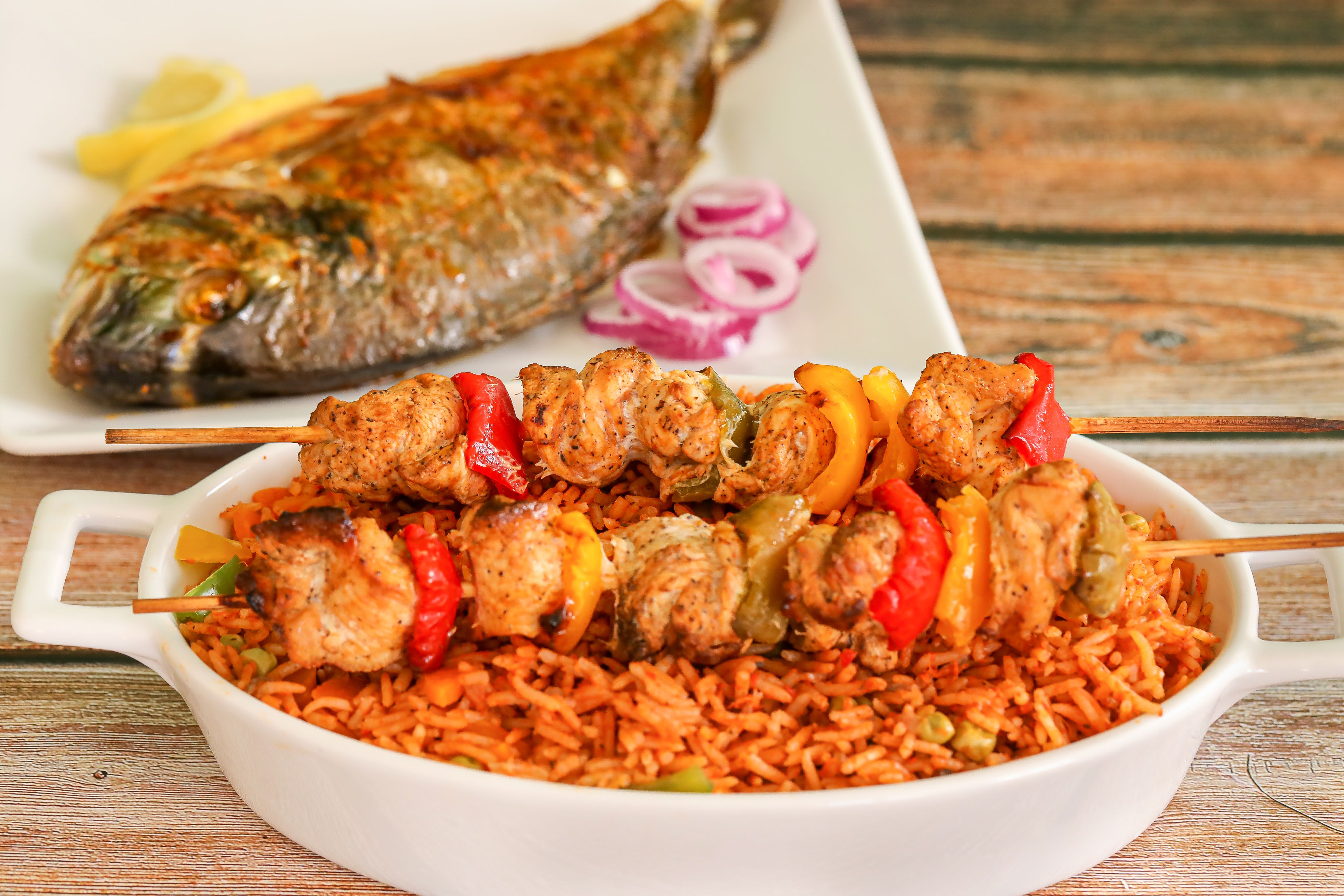
Walk down Rye Lane on a Saturday afternoon and Lagos is only a few phrases away. Traders call out in Yoruba over reggae and Afrobeats. Hairdressers weave extensions in shopfronts stacked with human hair. The air carries fried plantain, suya spice and dried stockfish from a dozen open stalls. This is Peckham, a district in the London borough of Southwark, and for more than fifty years it has carried an unofficial second name: Little Lagos. It is not a marketing slogan, Southwark’s own census data lists Nigeria as the single most common country of birth, outside the UK and Ireland, among its residents. To understand how a street in south-east London came to feel like a transplanted piece of Lagos, you have to go back to Nigeria’s own turbulent history since independence, and follow where its people went when home became hard to stay in.
Why Is Peckham Called Little Lagos?
The nickname reflects sheer weight of numbers rather than sentiment. England and Wales recorded 270,768 usual residents born in Nigeria in the 2021 Census, and London holds by far the largest share of them. Within Southwark, roughly two in five residents were born outside the UK and Ireland, and Nigeria tops that list of countries of origin. Most of Peckham’s Nigerian community traces to the Yoruba-speaking south-west of Nigeria, home to Lagos itself, which is why Yoruba, rather than Igbo, Hausa or Nigerian Pidgin, is the language most audibly spoken along Rye Lane. The comparison to Lagos is partly affectionate exaggeration; Lagos is a megacity of more than twenty million people, and Peckham is a handful of streets. But in the density of Nigerian shops, churches and everyday Yoruba conversation, few places outside Nigeria come closer.
From Lagos to London: Why They Came
Nigeria’s relationship with Britain runs deeper than any single migration wave. Nigeria gained independence from British colonial rule on 1 October 1960, and as a Commonwealth country its citizens held rights of entry to Britain that tightened only gradually, through the Commonwealth Immigrants Act 1962 and the legislation that followed it. Early Nigerian arrivals in the 1950s and 1960s were mostly students and professionals, drawn to London’s universities, teaching hospitals and inns of court. What changed the scale of migration was Nigeria at home. The civil war of 1967 to 1970, fought over the attempted secession of Biafra, was followed by an oil boom that briefly made Nigeria one of the world’s fastest-growing economies, and then, in the early 1980s, by a sharp fall in oil prices that emptied government coffers. General Ibrahim Babangida’s Structural Adjustment Programme, introduced in 1986 at the urging of the World Bank and International Monetary Fund, devalued the naira and cut public spending, and the hardship that followed pushed a new generation of Nigerians to look abroad. A further wave left through the 1990s under the military dictatorship of General Sani Abacha, whose repression of political dissent hardened many families’ decisions to leave for good. Each wave added to a community already forming in south-east London.
Why Peckham, Specifically
London’s Nigerian population did not distribute itself evenly, and Peckham’s advantages were practical rather than sentimental. Its Victorian terraces, many subdivided into bedsits and rented rooms after the Second World War, and its stock of postwar council housing offered rents that undercut much of central and west London, while Peckham Rye station, open since 1865, kept the area within easy reach of London Bridge and Victoria. Chain migration did the rest: early arrivals who bought property or secured tenancies began renting rooms to newer migrants, often relatives or people from the same town or church back home, and each new household anchored the next. As the community grew, traders on Rye Lane began stocking plantain, cassava and scotch bonnet peppers to meet demand, and the market became Nigerian in character as much as it served Nigerian customers.
Rye Lane’s Nigeria: Shops, Churches and Community
By the 1980s and 1990s, Rye Lane and the surrounding streets had built a largely self-sufficient Nigerian commercial and spiritual world. Shops combined functions in ways particular to diaspora economics: a barber’s chair beside a photocopier and international phone line, a boutique selling christening gowns alongside asoebi, the coordinated fabric worn by guests at Nigerian weddings and celebrations. Money-transfer counters and cargo agents, sending remittances and goods back to Lagos, Ibadan and beyond, became as essential as the food shops. Restaurants such as Lolak Afrique, opened by Halima, known locally as Mama Lolak, in 1996, served as informal community centres as much as places to eat abula and peppered goat meat. Churches multiplied alongside the businesses: the Celestial Church of Christ and Cherubim and Seraphim, both part of the Aladura tradition of white-garment Yoruba Christianity, held services in Yoruba and English, while newer congregations such as Eternal Zion and Glory of God drew younger, British-born members. Naming ceremonies, ordinarily a home-based Yoruba tradition, were adapted into local church services, and Afrobeats and Nollywood films playing from video stores gave the street its own soundtrack.
Beyond Peckham: Woolwich, Plumstead and Thamesmead
Peckham was never the whole story. As property prices rose through the 2000s and 2010s, part of the Nigerian population that built Little Lagos moved further into south-east London, to Woolwich, Plumstead and Thamesmead, largely within the neighbouring borough of Greenwich. The pattern is strikingly similar to Peckham’s own founding: hair shops, takeaways and market stalls selling okra and dried fish followed the people rather than the other way round. Southwark and Greenwich together now record some of the highest concentrations of Nigeria-born residents in the country, and residents in Woolwich describe the area in much the same terms once used of Peckham: a home away from home, built again from nothing by people who had already done it once.
Little Lagos Today: Between Belonging and Change
Peckham itself has changed in ways that test the nickname. The London Overground reached Peckham Rye in December 2012, on a line now named the Windrush line in honour of an earlier chapter of Black British migration. Journeys to Shoreditch and the City got quicker, and new residents and new money followed. Bellenden Road, a short walk from Rye Lane, has been rebuilt around cafés and bars aimed at a very different clientele, and locals will tell you that around half of the Nigerian families who lived in Peckham through the 1980s and 1990s have since moved on. Rye Lane’s market has not disappeared, though. It remains one of the busiest and most Nigerian streets in London on any given Saturday, even as some long-running shops close and others open in their place. Second-generation Nigerian Londoners, born or raised in Peckham, are keeping the connection alive on their own terms. The academic Funmi Alakija, who has studied this generation in Peckham, argues that they still perform Nigerian identity, just differently: through Afrobeats, Nollywood and ankara fashion rather than the shops their parents relied on.
Final Thoughts
Little Lagos was never a plan. It was chain migration, affordable rent and a market that started stocking plantain because enough people wanted it. What makes the story worth telling is how faithfully it has repeated itself, first from Lagos to Peckham, and now, as Peckham prices out the community that built it, from Peckham onward to Woolwich, Plumstead and Thamesmead. Nigeria’s history since 1960, independence, civil war, oil boom and bust, and dictatorship, explains why so many people left. What they built on Rye Lane explains why, wherever it moves next, it will still be recognisably Lagos.