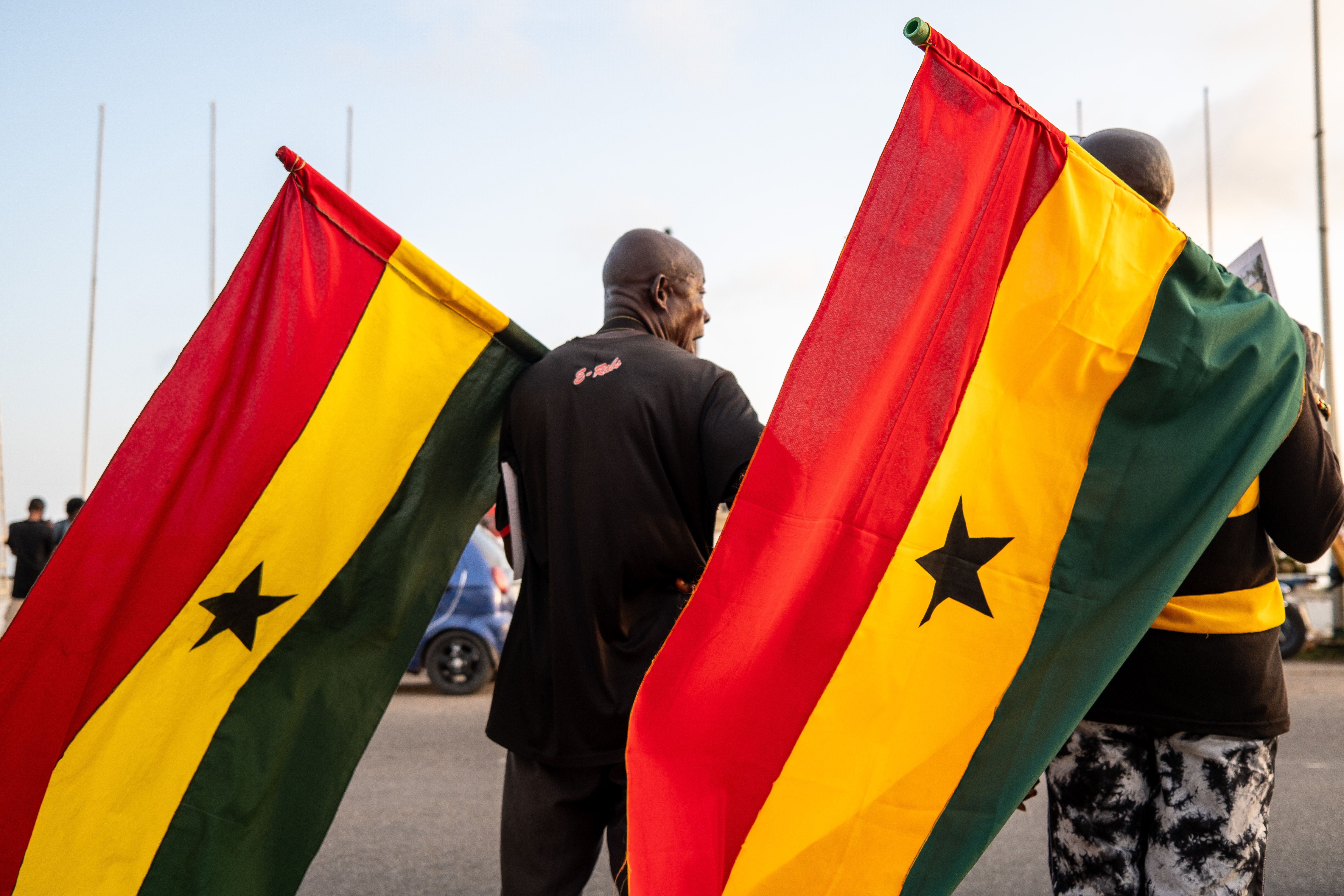
On 6 March 1957, the Union Jack came down over Accra and the flag of Ghana went up in its place, the first country in Sub-Saharan Africa to leave colonial rule behind. Nigeria, the much larger colony next door, had to wait another three and a half years, becoming independent only on 1 October 1960. Both territories had spent decades under the same Colonial Office, answering to the same ministers in London. So why the gap? The easy answer is that Ghana had Kwame Nkrumah and Nigeria didn’t quite have his equal, and there’s truth in that. But the longer I sat with the two timelines, the more it looked like the real story lay elsewhere: a smaller, more unified colony that could move fast, against a much larger, more divided one that both Britain and Nigeria’s own leaders agreed needed a slower, more careful hand. Working out why Ghana got there first tells us almost as much about Nigeria’s own road to independence as it does about Ghana’s.
A Fast Mover in a Slow Empire
Ghana’s route to independence ran through a decade of steadily escalating pressure. In 1947, the United Gold Coast Convention began calling for “self-government within the shortest possible time.” That pressure turned violent on 28 February 1948, when police shot and killed unarmed ex-servicemen marching in Accra, and riots followed across the colony. The British government’s Watson Commission, sent to investigate, found that the underlying grievances were real and recommended sweeping constitutional reform.
Kwame Nkrumah broke away from the UGCC in 1949 and founded the Convention People’s Party on a blunt platform: “Self-Government Now.” Where the UGCC had been a movement of lawyers and merchants, the CPP organised market women, ex-servicemen and ordinary workers, and it moved fast. In January 1950, Nkrumah launched the “Positive Action” campaign of strikes and boycotts, was arrested for it, and went to prison. It barely slowed him down. In the February 1951 election, held under a new constitution, the CPP won a landslide while its leader was still behind bars. Nkrumah was released to become Leader of Government Business, and by 1952 he was Prime Minister.
From there, the pace didn’t let up. A further constitution in 1954 delivered full internal self-government, and a 1956 plebiscite folded British Togoland into the Gold Coast, settling the colony’s last outstanding territorial question. Independence followed on 6 March 1957, a date chosen, MPs noted in the House of Commons, to mark the anniversary of the 1844 Bond that had first brought Gold Coast chiefs under British protection. From riot to republic took under a decade.
Nigeria’s Harder Arithmetic
Nigeria’s timeline looks slower largely because the country Britain had assembled was so much harder to hold together. Frederick Lugard’s 1914 amalgamation stitched the Northern and Southern Protectorates into a single colony on paper, but the two halves shared little in practice: a largely Muslim, emirate-governed north administered through indirect rule, and a south shaped by Christian missions, Western schooling and far more direct colonial administration. By the 1952–53 census, Nigeria’s population stood at roughly 31.6 million people, against the Gold Coast’s 1948 count of just over 4 million, a colony six to eight times the size, spread across a far wider range of religions, languages and systems of local government.
That scale showed up directly in the constitutional timetable. The 1946 Richards Constitution introduced regional houses for the North, West and East; the 1951 Macpherson Constitution added a federal legislature; and the 1954 Lyttleton Constitution, thrashed out at conferences in London and Lagos, finally settled Nigeria as a genuine federation of three regions with Lagos as federal capital. Even then, independence didn’t arrive on a single date the way Ghana’s did. The Eastern and Western regions reached self-government in 1957. The Northern Region, whose leaders feared being outpaced by the more Western-educated south, didn’t get there until 1959. Nigeria needed one more year of negotiation after that before the whole federation could become independent together, on 1 October 1960.
One Dominant Party Against Three Regional Ones
Ghana’s speed owed a great deal to the CPP’s near-total dominance of Gold Coast politics: one party, one leader, one message, delivered nationwide. Nigeria never had an equivalent. Its politics organised instead around three major regional parties, each rooted in a different part of the country: the National Council of Nigeria and the Cameroons under Nnamdi Azikiwe, strongest in the Igbo-majority East; the Action Group under Obafemi Awolowo, based in the Yoruba-majority West; and the Northern People’s Congress, led by Ahmadu Bello and represented federally by his deputy, Abubakar Tafawa Balewa, dominant across the Hausa-Fulani north.
None of the three could plausibly claim to speak for the whole country the way Nkrumah’s CPP spoke for the Gold Coast, and none was willing to be governed by the others’ timetable. Northern leaders, in particular, worried openly that a hasty rush to independence would leave the region’s institutions outmatched by the South’s head start in Western education and administration, hence their insistence on a later self-government date. Getting all three regions into a federation each was willing to sign up to took years of constitutional conferences that Ghana, with its single dominant movement, simply didn’t need.
Britain’s Different Playbook in Each Colony
British officials were candid, at the time, about treating the two colonies differently. Introducing the Ghana Independence Bill in the Commons on 11 December 1956, Lord John Hope described the Gold Coast’s rapid constitutional evolution, non-official majorities from 1946, internal self-government from 1951, near-complete self-government by 1954, as making it “the first of the British dependent territories in tropical Africa to attain full self-government as a sovereign and independent nation.” Nigeria got no such fast track. Moving the Nigeria Independence Bill on 15 July 1960, Colonial Secretary Iain Macleod called the country “extraordinarily diverse in race, religion and in social and economic development,” which was precisely why it needed a federal structure with real regional autonomy rather than a single unitary government.
Perhaps the most telling line came from Arthur Creech Jones, a former Colonial Secretary himself, who told the House that when he had run the Colonial Office years earlier, “we used to think that when we dealt with the problem of Nigeria we virtually had eternity to play with.” Even Britain hadn’t expected Nigeria to be ready this quickly. The country had simply outpaced the Colonial Office’s own assumptions about how long it would take.
Why Did Ghana Get Independence Before Nigeria?
Ghana was smaller and far more unified, religiously and administratively, and it was mobilised early and fast by one dominant nationalist party under Kwame Nkrumah. Nigeria was several times larger and more diverse, split across three regions with three separate political blocs, and each of those blocs had to agree to a federal constitution before any of them would agree to leave British rule. Ghana went from its first mass unrest to its first independent flag in under a decade. Nigeria’s federation needed extra years just to agree with itself before it could turn that agreement into a single independence date.
What the Gap Says About Nigeria’s Own Story
It’s tempting to read Nigeria’s slower path as simple lag, as though the country was behind Ghana on the same road. The more honest reading is that Nigeria was never on the same road at all. Ghana’s 1957 constitution had its own regional safeguards on paper, but Nkrumah’s government abolished the regional assemblies by March 1959 and declared Ghana a unitary republic the following year. The same speed and central authority that had won independence so quickly made it just as easy to sweep away the federal compromises once independence was secured.
Nigeria’s federalism, built through years of grinding negotiation between the North, East and West, proved far harder to dismantle, because it wasn’t a courtesy extended from the centre. It was the actual price of getting three genuinely different regions to agree to share a country at all. That federal bargain has been tested badly since, not least by civil war, but it has never been abandoned, and Nigeria still governs itself today through a modified version of the regional structure Lyttleton’s negotiators worked out between 1954 and 1960. Being first past the independence post wasn’t the same as having solved the harder problem. Ghana answered the question of how to leave the empire. Nigeria’s founders were also trying to answer a much bigger one, how a federation that large and that varied could hold together once the empire was gone, and three extra years of negotiation was the price of taking that question seriously.
Final Thoughts
Both flags went up within the same Commonwealth generation, under the same Colonial Office, during the same decade of African decolonisation. The three and a half years between them weren’t wasted time. Nigeria spent them settling arguments, between its regions, its parties, London and Lagos, that Ghana never had to have, because Ghana never contained that much difference to begin with. You can still see the result today: Nigeria governs itself through a federal structure that has been strained, fought over and, at times, suspended under military rule, yet has never actually been abandoned, while Ghana settled into a unitary state within three years of independence and has stayed one ever since. Ghana got there first. Whether getting there first was the harder achievement is a different question, and the record suggests it probably wasn’t.